
If you’re searching for fresh, effective ways to help your struggling readers master CVC words, you’ve come to the right place. Teaching CVC words (consonant-vowel-consonant words like “cat,” “dog,” and “sun”) is one of the most rewarding parts of early literacy instruction, but it can also be challenging when students need extra support.
In this post, I’m sharing hands-on CVC word activities, teaching strategies backed by the Science of Reading(new hot stuff), and practical tips that work wonders for kindergarten and first grade students who need a little extra help.
What Are CVC Words and Why Do They Matter?
CVC words are three-letter words that follow a simple consonant-vowel-consonant pattern. Think “mat,” “pig,” “cup,” and “bed.” These simple words are the building blocks of reading! They’re usually the first real words your students will decode independently because they follow predictable phonics rules where each letter makes its sound.
For struggling readers, mastering CVC words is a huge confidence booster. When kids can successfully sound out these words, they start believing in themselves as readers. That’s why it’s so important to make CVC word practice engaging, multisensory, and fun!
When to Start Teaching CVC Words
Here’s a game-changer: you don’t need to wait until students know ALL their letters before introducing CVC words! If your students know the sounds for letters like “s,” “a,” “t,” “m,” and “p,” they can start blending simple words like “sat,” “mat,” “tap,” and “pat.”
Starting early helps students understand the alphabetic principle—the idea that we use letters to represent sounds, and we put those sounds together to read words. Plus, it makes letter sound practice more meaningful because kids see an immediate purpose for learning those sounds!
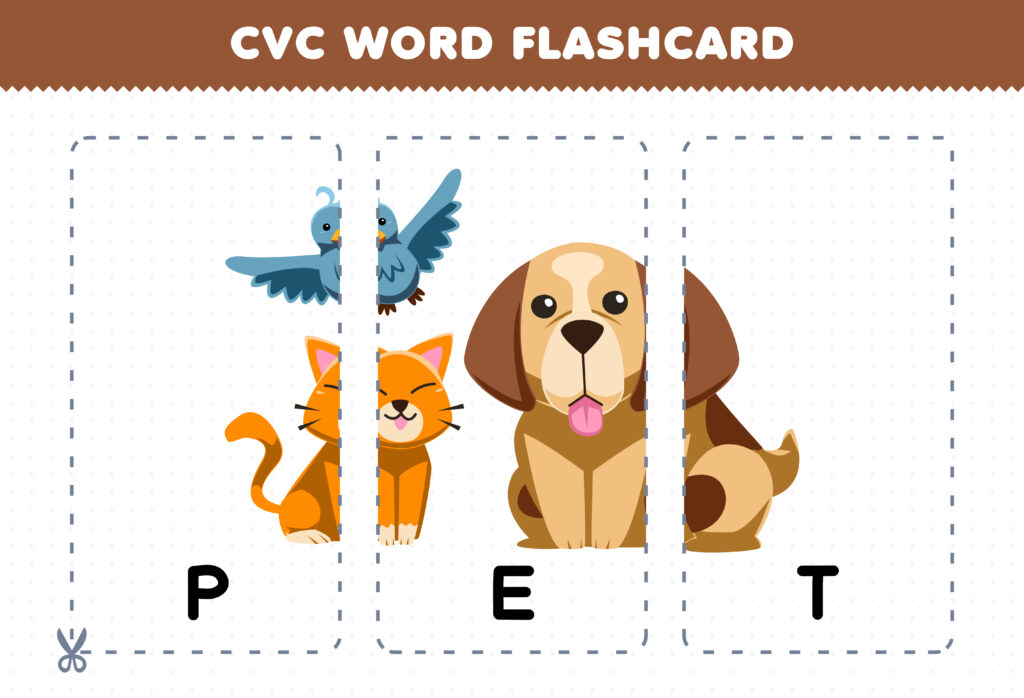
5 Essential Strategies for Teaching CVC Words to Struggling Readers
1. Build Letter Sound Fluency First
Before students can blend CVC words, they need to recognize letters quickly and recall their sounds automatically. Spend time with letter sound drills, alphabet activities, and plenty of practice until students can say letter sounds without hesitation. This fluency makes blending so much easier!
2. Start with VC Words (Vowel-Consonant Words)
Here’s a scaffold that many teachers overlook: begin with two-sound words like “at,” “in,” “up,” and “on” before jumping to three-sound CVC words. With only two sounds to blend, students build confidence and understand the blending process without feeling overwhelmed. Once they master VC words, adding that beginning consonant becomes much more manageable!
3. Use Successive Blending for Extra Support
Struggling readers often find it difficult to hold three separate sounds in their memory long enough to blend them together. That’s where successive blending comes in! Instead of blending /c/ /a/ /t/ separately, teach students to blend the first two sounds together first: /c/ /a/, /ca/ + /t/ = cat.
This technique reduces the cognitive load by having students blend just two sound chunks at a time. It’s especially helpful for students who struggle with working memory.
4. Choose Words with Continuous Sounds
Not all consonants are created equal when you’re teaching blending! Continuous sounds (f, l, m, n, r, s, v, z) can be stretched out: “mmmmm,” “ssssss,” “rrrrr.” This makes them easier to blend than stop sounds like “b,” “d,” or “t.”
Start with CVC words that begin with continuous sounds: “man,” “run,” “fat,” “sun.” Once students master these, gradually introduce words with stop sounds. This simple adjustment can make a world of difference for struggling readers!
5. Practice Phonemic Awareness Without Letters
Strengthen your students’ blending skills by practicing with sounds alone—no letters needed! Say three sounds aloud (/p/ /i/ /g/) and have students blend them to identify the word (“pig!”). This oral blending practice helps students focus purely on the sound manipulation without the added task of decoding letters.
10 Fun, Hands-On CVC Word Activities That Struggling Readers Will Love

1. CVC Word Building with Magnetic Letters
There’s something magical about manipulating physical letters! Give students magnetic letters or letter tiles and have them build CVC words. Start by building a word together (like “cat”), then change one letter at a time to make new words (“bat,” “mat,” “sat”). This kinesthetic activity helps students see word patterns and makes learning tactile.
2. Roll and Read CVC Games
Turn reading practice into a game! Create a simple game board where students roll a die and read the CVC words on the matching row. The randomness of the die roll keeps it exciting, and the repetition builds fluency. Students don’t even realize they’re practicing because they’re having so much fun!
3. Spin and Write Activities
Use a spinner with CVC words and have students spin, read the word aloud, and then write it. This combines reading, writing, and fine motor practice all in one engaging activity. It’s perfect for literacy centers or small group intervention!
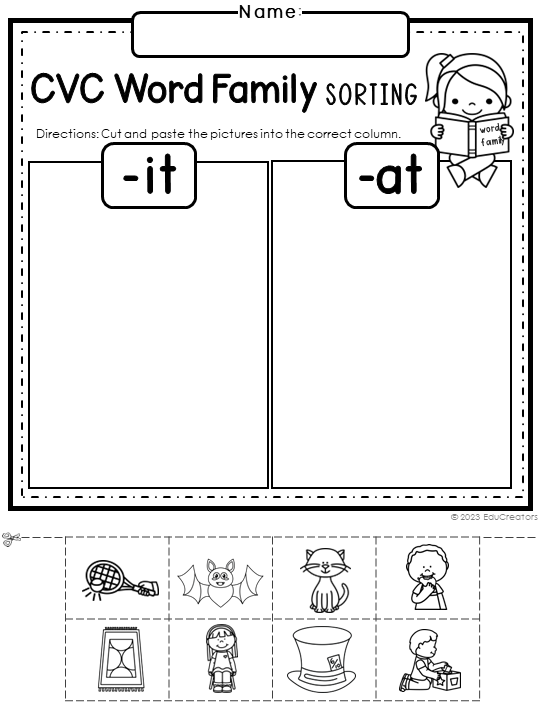
4. CVC Word Family Sorts
Help struggling readers see patterns by sorting CVC words by word families. Use images with words from the -at, -an, -ig, -op families and have students sort them into groups. When students recognize these chunks, they become more efficient readers because they’re decoding patterns rather than individual sounds.
5. Read and Reveal Cards
These self-checking cards are fantastic for building independence! Students read a CVC word, then flip the card over or remove a clip to see a picture. If the picture matches what they read, they know they got it right! This immediate feedback is incredibly valuable for struggling readers.
6. CVC Word Dominoes
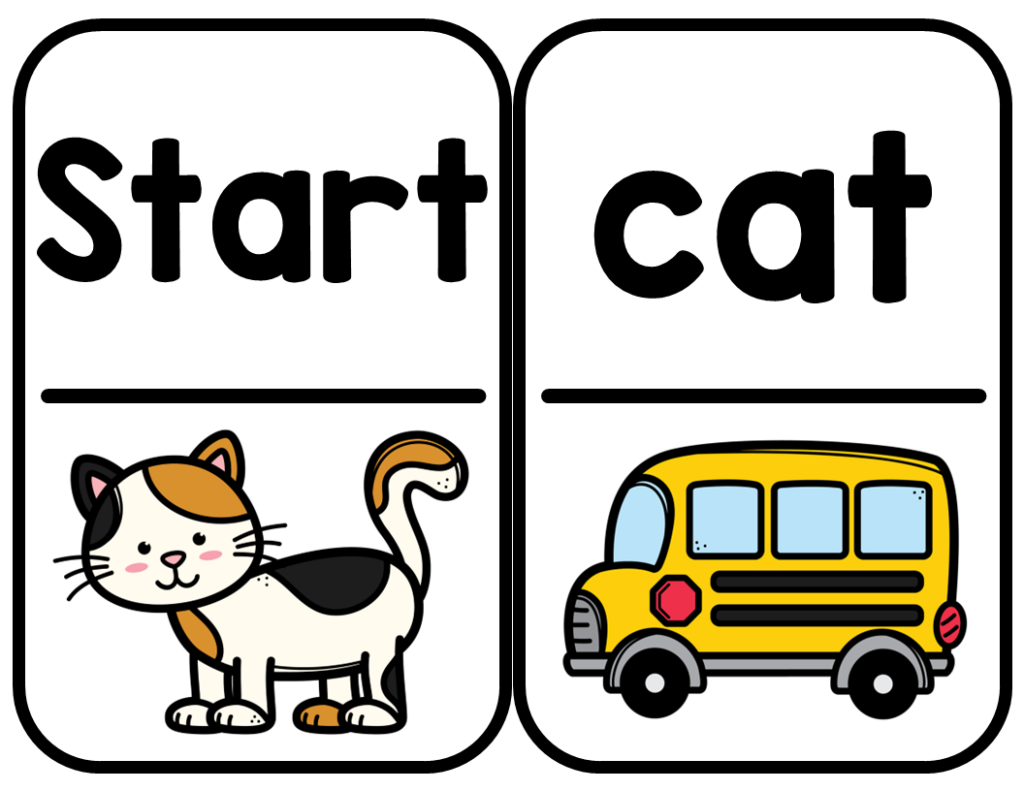
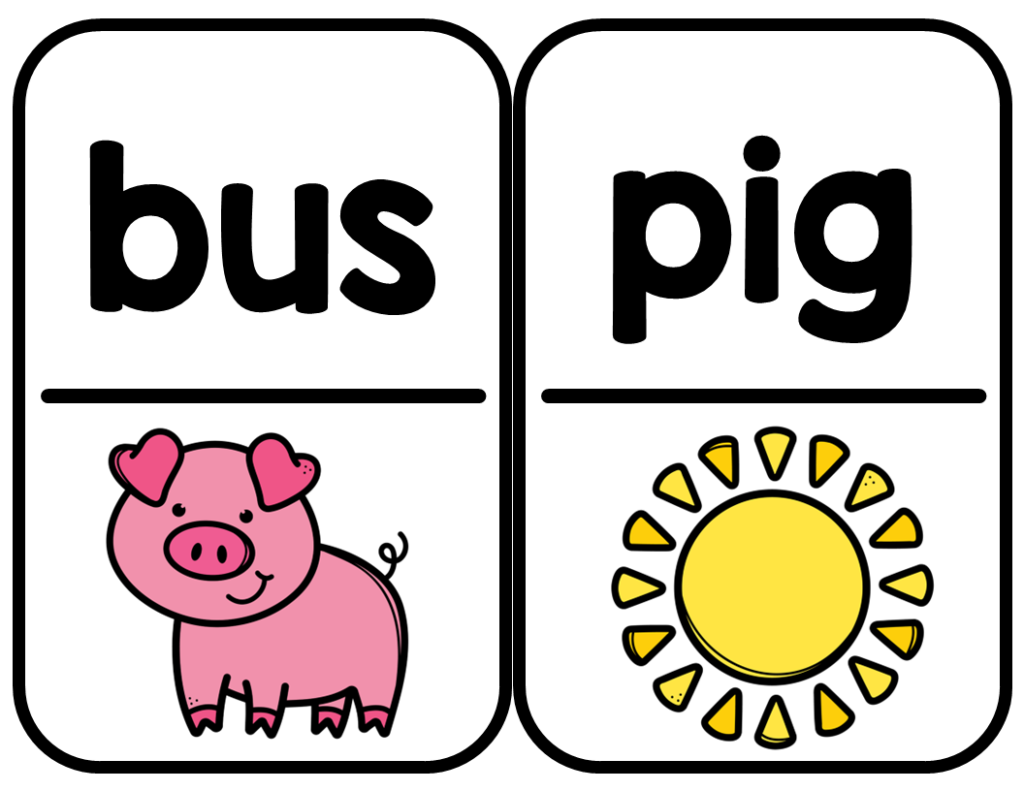
This classic game gets a phonics twist! Create domino cards where students match CVC words to pictures or match rhyming CVC words. Students take turns placing dominoes end-to-end, reading each word as they go. It’s perfect for partner work and helps students recognize word patterns while having fun!
7. CVC Word Bingo
Create bingo cards with CVC words instead of numbers. Call out words, and students mark them on their boards. You can differentiate by having some students read the words themselves while others listen and identify. Bingo is always a classroom favorite!
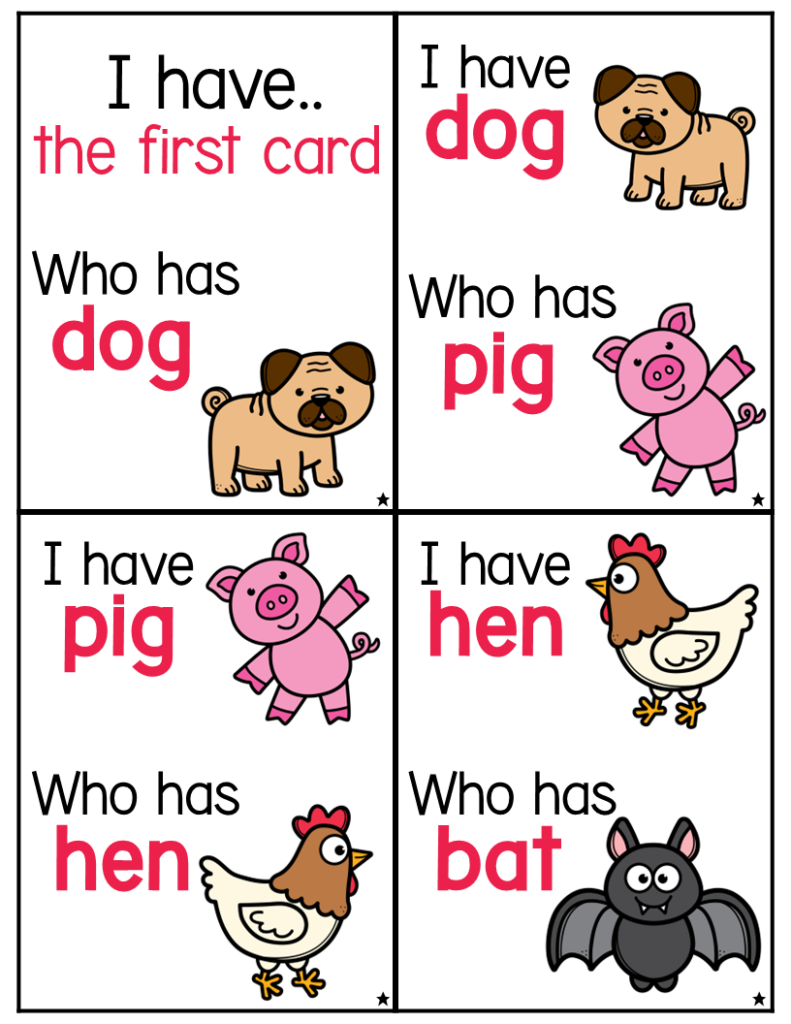
8. “I Have, Who Has?” CVC Word Game
This whole-class game is absolutely magnetic for keeping students engaged! Each student gets a card with a CVC word and a picture. One student starts by reading “Who has…?” and describing their picture or word, then the student with the matching card responds “I have…” and continues the chain. It keeps everyone alert, practicing reading, and listening for their turn. Struggling readers especially love this because they get to practice their specific card multiple times before their turn!
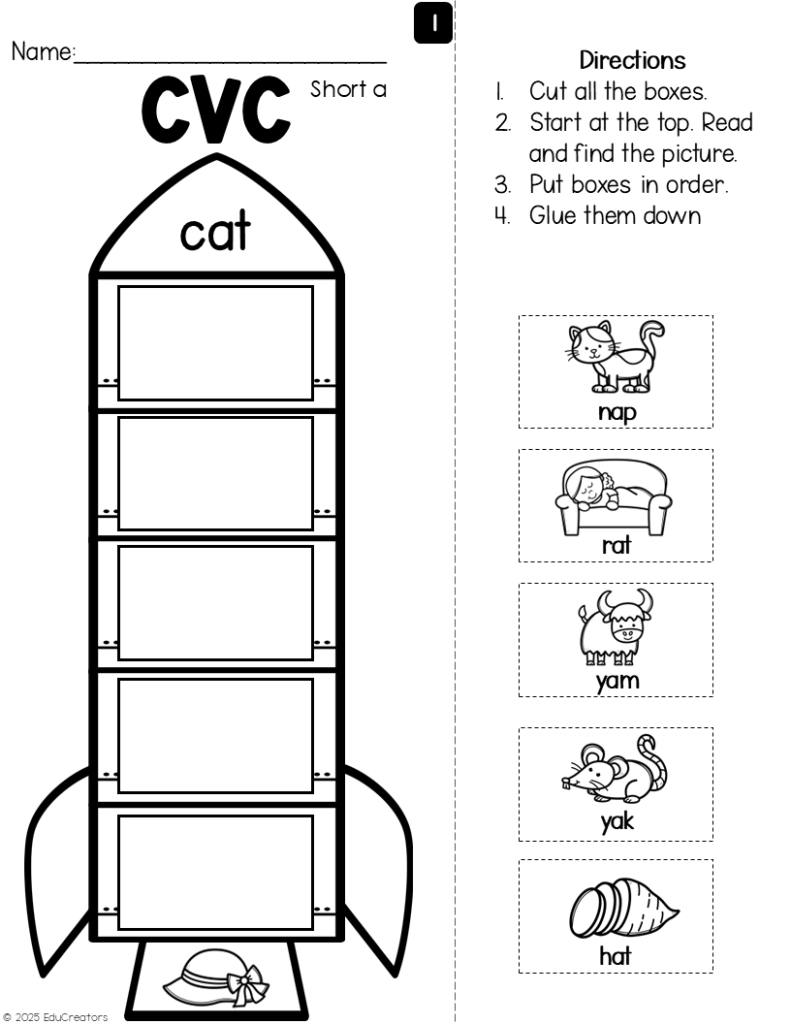
9. CVC Cut and Paste Worksheets (Self-Checking!)
These are game-changers for struggling readers! Students cut out CVC pictures/words and paste them below to the matching word. The self-checking feature means when they glue all images they get immediate feedback if the last picture and word matches. These CVC Cut and Paste worksheets are especially great because they provide that independent practice struggling readers need. Plus, the cutting and pasting adds a fine motor component that keeps hands busy while brains are learning!
10. CVC Word Decodable Readers
Once students can read individual CVC words with some fluency, it’s time to practice reading them in context! Use simple decodable books that feature mostly CVC words along with a few basic sight words. These predictable texts let students apply their decoding skills while experiencing the joy of reading complete sentences and stories.
Moving Beyond Individual Words: CVC Words in Sentences
One common mistake is spending too much time on isolated word reading without moving to connected text. Struggling readers need to see how CVC words work in real reading situations! Use simple sentences with CVC words like:
- “The cat sat on a mat.”
- “I see a big red bug.”
- “Can you run and jump?”
You can create sentence cards, sentence building activities, or simple passages that exclusively use CVC words and previously taught sight words. This bridges the gap between word reading and actual reading comprehension.
Digital CVC Word Activities for Tech-Savvy Classrooms
Don’t forget about digital options! Many struggling readers are motivated by technology, and digital activities can provide instant feedback:
- Interactive CVC Word Games: Online games where students click on pictures that match CVC words
- Self-Correcting Digital Activities: Google Slides or Boom Cards that tell students immediately if they’re correct
- CVC Word Apps: Many apps feature engaging animations and sounds that make practice entertaining
Creating a Comprehensive CVC Word Practice Routine
The key to helping struggling readers is consistency and variety. Here’s a sample weekly routine you might follow:
Monday: Introduce new CVC words with magnetic letters and word building Tuesday: Practice with games (roll and read, bingo) Wednesday: Read CVC words in simple sentences or decodable readers Thursday: Writing practice—students write CVC words to match pictures Friday: Review week’s words with a fun activity like sensory bins or playdough
An Endless Bundle of Resources
If you’re looking for a comprehensive, done-for-you solution that includes all these activities and more, I highly recommend checking out this CVC Words ENDLESS BUNDLE. It’s a growing bundle packed with everything you need to teach CVC words effectively:
- Engaging worksheets and printables
- Hands-on center activities
- Games that make practice fun
- Editable Options
- Hands- On Practice
The best part? As a growing bundle, new resources are added throughout the year, so you’ll always have fresh activities to keep your struggling readers engaged. It takes the planning stress off your plate so you can focus on what really matters—helping your students become confident readers!
Differentiation Tips for Mixed-Ability Groups
When you have students at different levels:
- For students still learning letter sounds: Focus on VC words and building with just two letters
- For students blending but not fluent: Use flashcards, timed activities, and games for speed
- For students ready for more challenge: Introduce CVCC words (like “lamp”) or work on reading CVC words in longer passages
The same activity can often be adapted for different levels. For example, with magnetic letters, some students might build simple CVC words while others create word families or even simple sentences.
Tracking Progress with CVC Words
Don’t forget to monitor progress! Keep simple records of:
- Which word families students have mastered
- Reading fluency (how many CVC words per minute)
- Accuracy in writing CVC words
- Ability to read CVC words in sentences vs. isolation
This data helps you know when to move forward and when students need more practice with particular patterns.
The Bottom Line: Make It Fun, Keep It Consistent
Teaching CVC words to struggling readers doesn’t have to be frustrating or tedious. With the right strategies, engaging activities, and consistent practice, every student can master these foundational reading skills. Remember to:
✅ Build letter sound fluency first
✅ Start with easier VC words before full CVC words
✅ Use multisensory, hands-on activities
✅ Make it game-based when possible
✅ Practice words in context, not just isolation
✅ Celebrate small wins to build confidence
✅ Be patient and provide plenty of practice opportunities
Your struggling readers will get there—they just need the right support, engaging activities, and a teacher who believes in them (that’s you!). With these strategies and resources in your teaching toolkit, you’re well-equipped to help every student become a successful reader.
Want to save this post for later? Pin it to your favorite teaching board on Pinterest so you can easily find these CVC word teaching strategies whenever you need them!
Have you tried any of these CVC word activities with your struggling readers? I’d love to hear what’s working in your classroom! Drop a comment below and let’s share ideas!