

Teaching kindergarten is a beautiful, high-energy whirlwind. It is an incredibly rewarding year as you watch five and six-year-olds transform into independent little learners.
However, we all know how quickly a beautifully planned lesson can get derailed when a tiny human decides to use their chair as a jungle gym or starts a vocal solo during quiet reading time. Kindergarten behavior can feel like a game of whack-a-mole if you do not have the right systems in place. (Because let’s face it, a classroom completely distracted by a loose shoe or a passing fly can test anyone’s sanity!)
If you are tired of repeating yourself fifty times a day and are ready to bring some peace back to your carpet time, you are in the right place. Here are 10 realistic, straight-shooting behavior strategies that work with real kindergarten students.
1. Co-Create Visual Expectations
Kindergarteners are incredibly visual learners. If you just list out a set of abstract rules on the first day of school, those expectations will instantly fly out the window.
Instead, involve your students in creating visual anchor charts. Physically model what “good listening” looks like and takes pictures of your actual students doing it correctly. Hang these right at their eye level so you can point to them throughout the day.
2. Master the Art of the Non-Verbal Cue
Repeating “quiet down, please” over and over is an absolute recipe for teacher burnout. It also adds unnecessary noise to an already loud room!
Save your voice by relying heavily on non-verbal signals. You can use simple hand signs for bathroom breaks, a special chime that means “freeze and look,” or a simple hand-on-the-head movement that students must copy when they see you do it.
3. Use Positive Narration
It is so easy to fall into the trap of calling out the negative behaviors because they stand out so loudly. But a funny thing happens when you flip the script. Kindergarteners crave your attention, and they will gladly change their behavior if they see someone else getting praised for doing the right thing.
Instead of saying, “Stop rolling on the carpet, Leo,” try positive narration. Say something like, “I love how Maya is sitting criss-cross with her eyes right on me!” Watch how fast the rest of the carpet magically mirrors Maya.
4. Keep Transitions Fast and Playful
Transitions are prime real estate for behavior meltdowns. When there is empty, unstructured time between activities, chaos will happily fill the gap.
Make your transitions a fast-moving game. Use a countdown timer, play a quick 30-second song, or challenge the class to clean up as quietly as mice. Giving them a specific, high-energy goal keeps their little minds focused on the task instead of on poking their neighbor.
5. Implement Regular Brain Breaks
Let’s be completely real for a second. Five-year-olds are not built to sit still for long stretches of time. Expecting them to listen to a twenty-minute lecture is a fast track to an “AUGH!” moment.
Keep your mini-lessons punchy and follow them up with intentional movement.
🍎 Do a quick freeze dance video.
🍎 Have them stretch to the ceiling and touch their toes.
🍎 Let them do ten jumping jacks before jumping into their independent work.
6. Establish Predictable Routines
Anxiety and uncertainty often manifest as misbehavior in primary classrooms. When kids do not know what is coming next, they get wiggly and unsettled.
Build an airtight, predictable daily schedule and display it visually. Walk through it every single morning. When students know exactly what to expect after lunch, during centers, and right before dismissal, their nervous systems relax.
7. The Power of the “First / Then” Statement
When a student is dug in and refusing to work, arguing or pleading will get you nowhere. Keep your language simple, direct, and completely calm by using “First/Then” framing.
Keep it short and sweet. “First finish your drawing, then you can go to the block center.” It eliminates the negotiation phase and sets a clear, gentle boundary.
8. Create a Designated Safe Space
Sometimes a student is not trying to be disruptive; they are simply experiencing a massive wave of big emotions and are completely overwhelmed.
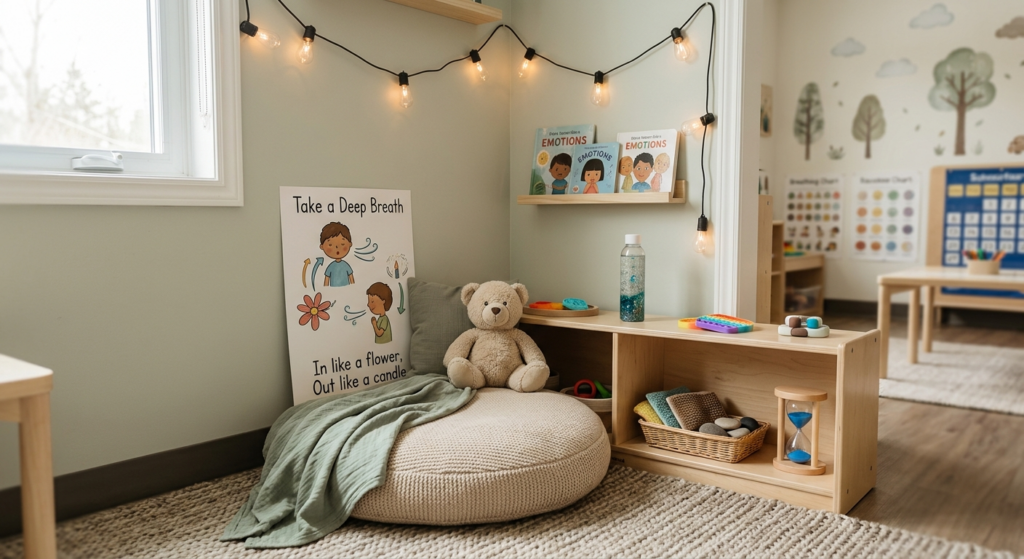
Set up a quiet, cozy corner in your room where students can voluntarily go to reset. Fill it with a plush pillow, some calm-down timers, and visual breathing cards. Frame it as a positive tool to help them feel better, never as a punishment or a time-out spot.
9. Give Controlled Choices
Power struggles can drain your teacher battery faster than almost anything else. If a student is refusing an instruction, try offering two acceptable options where you win either way.
Instead of demanding, “Put your folder away right now,” try offering a choice. “Would you like to put your folder away in your cubby, or should I walk with you to do it?” This gives the child a sense of autonomy while still ensuring the task gets done.
10. Build Individual Connections
At the end of the day, no chart, token, or behavior strategy can replace a genuine relationship. Kindergarteners want to know that you see them, value them, and care about them.
Spend just two minutes a day chatting with your trickiest students about things completely unrelated to school. Ask about their favorite cartoon, admire their new shoes, or give them a special high-five at the door. When a child feels safe and connected to you, they will naturally want to do their best in your classroom.
Keep Motivation High with Behavior Punch Cards
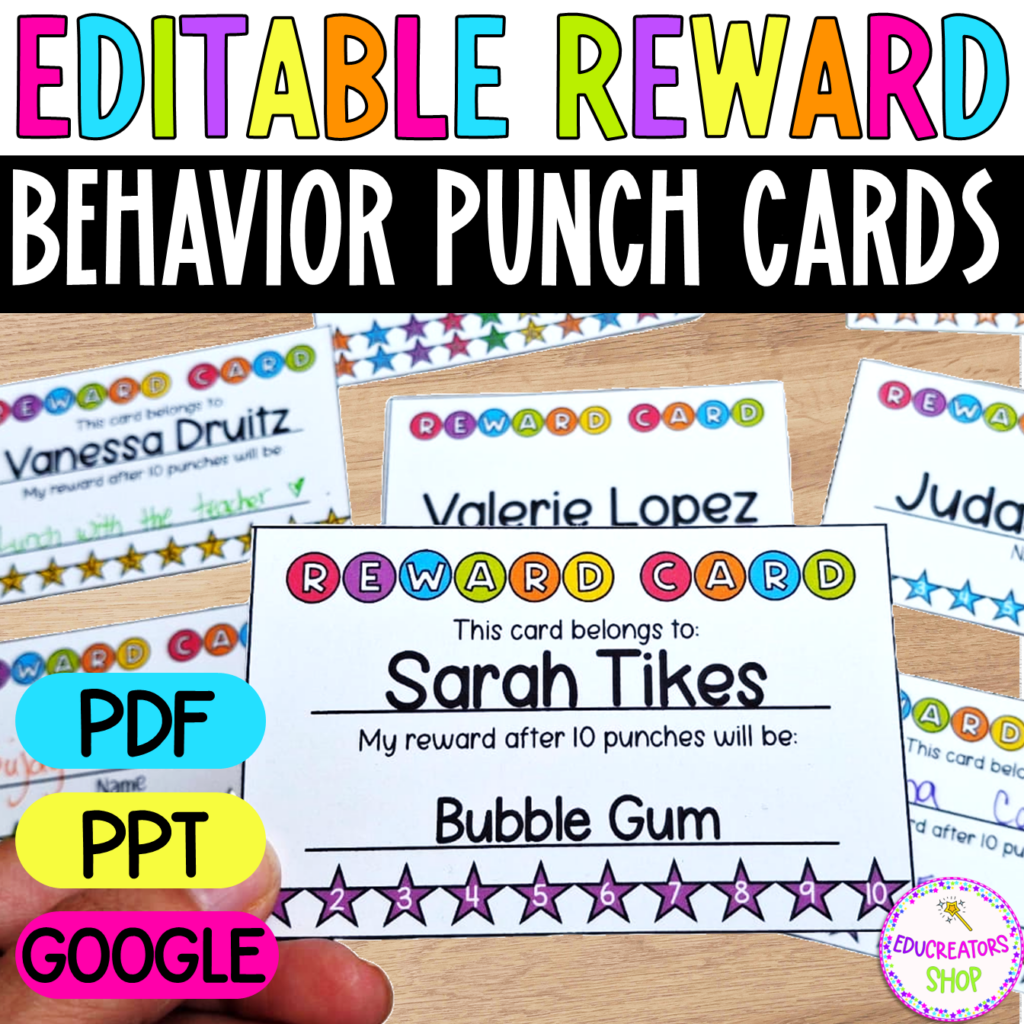
When you need an extra layer of individual support for specific behaviors, having a tangible, highly visual tool makes all the difference. That is where behavior punch cards become your absolute best friend.
Instead of relying on complicated charts or vague promises of rewards at the end of the week, punch cards give students immediate, concrete feedback. Every time a student meets a specific goal, they get a satisfying punch in their card.