
It’s week one of kindergarten. You’ve got twenty brand-new readers, a classroom that still smells like new crayons, and about ten minutes between “criss-cross applesauce” and the first meltdown. And somehow, the alphabet still has to happen.
Take a breath. The first month of kindergarten doesn’t need a Pinterest-worthy alphabet wall. It needs alphabet activities for kindergarten that actually work – and a plan to run them.
Enter the alphabet bootcamp: a week-by-week letter-sound routine that’s explicit, fast, and built on Science of Reading principles. No laminating marathons. No forty-step centers. Just ten minutes a day and printables you can prep in one sitting.
And August is the moment to set it up. Letter-sound instruction launches in the first weeks of kindergarten, so a plan ready before the first bell means the first month of literacy blocks is handled.
Here’s the plan – week by week.
Why Letter-Sound Knowledge Comes First
Here’s what the research says, in plain teacher terms. Beginning readers have to connect the sounds in spoken words (phonemes) to the letters that stand for them (graphemes). That connection makes decoding possible: when a child knows that m says /m/, blending sounds into words becomes doable.
The key? Explicit instruction. Kids don’t pick up letter-sound relationships by osmosis. They learn them when we name the letter, say the sound, show the connection, and hand them a chance to practice.
Systematic. One small set of letters at a time. That’s what science of reading kindergarten instruction looks like – and exactly what a bootcamp does.
Alphabet Activities for Kindergarten: The Week-by-Week Plan
The whole routine takes ten minutes a day, plus one optional center. Materials? Magnetic letters or printed letter cards, a pocket chart, and a few simple printables. That’s the entire list.
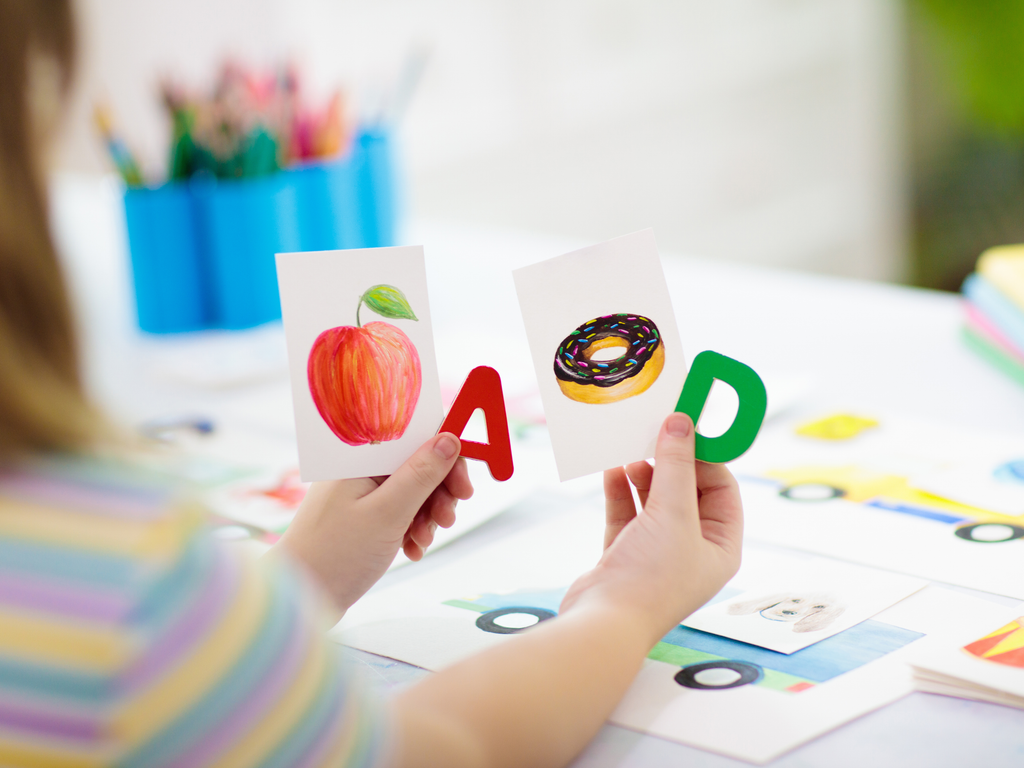
Week 1: Start Small and Strong
Introduce four letters: m, a, t, s. One letter per day, same loop.
- Name it. “This is the letter m. It says /m/.”
- Hear it. Say three words – mat, moon, milk. Kids raise a hand when they hear /m/.
- Find it. Send kids on a sound hunt for an object that starts with today’s sound.
- Sort it. Friday: sort the week’s letters into “m” and “not m” piles.
Four letters. Five days. One routine. Done.
Keep the pace snappy – two minutes per step, tops. Short and fast beats long and polished in week one.
Week 2: Add Four More
Introduce p, f, i, n with the same loop. Then add a pocket chart sort: kids match each picture card to its first sound.
Why four letters a week? It’s a sweet spot: enough new material to keep things moving, few enough that every child can keep up.
Prep time? About four minutes with a printed picture set. Engagement? Kids will argue over who gets to place the last card – the good kind of arguing.
Week 3: Mix, Match, and Review
Add c, o, d, g. Now start combining skills: “Find the letter that says /d/. Now find a picture that starts with /d/.”
Why review before adding? New letters stick better when old ones stay warm.
Plus, introduce a cut-and-paste beginning-sound sort. Kids glue pictures under “starts with /t/” or “starts with /p/.” Scissors, glue, one printable, all set.
Week 4: First Sounds, First Checks
Add l, h, b, r – that’s 16 letters down, and time for a gentle check-in.
- Hold up letter cards one at a time; kids say the sound together, then a few turns solo.
- Sort the whole deck into “letters I know” and “letters to meet again.”
Five minutes, low stakes, and you walk away knowing exactly what to review next.
Those checks aren’t grades – they’re your map for what to teach next. The letters kids know cold become the starting line for blending and segmenting practice in October.
The Ten-Minute Loop, Minus the Prep
The best part? Every week runs the same loop. Teach it once and the routine runs itself – just swap in the new letters.
The daily loop:
- Introduce the letter: name, sound, and one keyword (m – moon – /m/).
- Practice the sound together: choral response, then a few individual turns.
- Play a quick game: sound hunt, pocket chart sort, or “stand up if your name starts with…”
- Close with a printable or a one-minute sort.

One quick note: focus heavily on the sound during decoding drills. While kids should know the letter name, keeping the focus on /m/ during reading tasks ensures they don’t try to blend ’em-a-tee’ when reading ‘mat.
Keep a stash of go-to printables: letter-sound picture cards, beginning-sound sort pages, “color the pictures that start with ___” pages, and a letter tracing strip. Print-and-go, black-and-white friendly, no cutting 400 tiny cards at midnight.
Plus, these letter sounds activities take ten minutes, use one printable, and need zero setup tomorrow.
Make It Fit Your Class
What about the range of learners in front of you? The loop adjusts. Students who are ready can sort extra cards, hunt for ending sounds, or lead the choral response. Students who need more time simply keep the same letter set for another week – no shame, no drama, just another round of practice.
And if you need letter recognition activities for morning tubs or fast finishers, the sort pages do double duty. One printed set, two jobs, zero extra prep.
Frequently Asked Questions🤔
How do I teach letter sounds in kindergarten?
Teach one letter a day with the same short loop: name the letter, say the sound, hunt for words that start with it, and sort. Keep it to ten minutes, keep it active, and repeat the loop the next day with a new letter.
How many letters should kindergartners learn each week?
Four is the sweet spot for the first month. It keeps things moving without leaving anyone behind. When a set feels shaky, keep it for another week – no shame, no drama.
How long should letter-sound practice take each day?
Ten minutes is plenty. Alphabet activities for kindergarten should be short, active, and done before the wiggles win.
The Teacher-Friendly Truth
The bootcamp works because it matches how kids actually learn to read: explicit letter-sound instruction, a few letters at a time, and lots of active practice. And it matches how teachers actually live: ten minutes a day, zero laminating, one trip to the copy machine.
Your students get hands-on practice that keeps them engaged and moving. You get a month of literacy blocks planned before your coffee is done brewing.
That’s the goal: strong letter-sound foundations, and a teacher who still has a Sunday.
Here’s to a smooth first month of letters and sounds. You’ve got this – and so do they.
xoxo Vanessa